
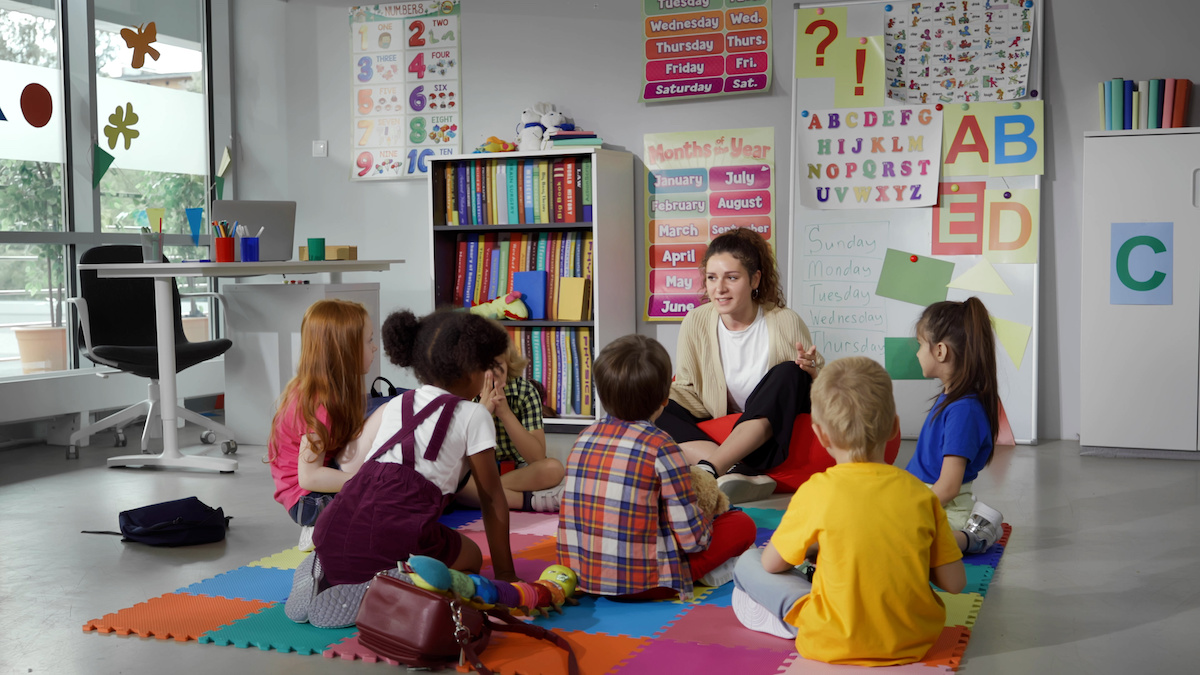
The time before official education is a crucial window for basic social and emotional development when young children pick up the sophisticated social skills necessary to negotiate relationships and group dynamics. Through directed play, everyday interactions, and immersive experiences in safe, stimulating surroundings, this growth happens not by means of official teaching. Regular interaction with friends and caring adults helps to develop important abilities, including sharing, empathy, communication, and collaboration.
These early skills are necessary for general well-being and future academic achievement. Such thoughtfully designed, play-based settings as those seen in best kids club holidays provide priceless chances for children to develop and refine these fundamental life skills beyond the home, increasing self-assurance and social fluency in an enjoyable, supportive setting.
Parallel and Associative Play Contact
Children frequently engage in parallel play in the toddler and preschool years playing alongside others with matching toys. From this develops associative play, in which they start to interact, share supplies, and converse, although with a basic emphasis on the activity instead of structured regulations. This first step covers observations, turn-taking, and the fundamentals of peer engagement.
Children first learn through these contacts that other people have different ideas and deeds, hence laying the ground for more cooperative social contacts and interpretation of social signals within a common environment.
Language Scaffolding And Guided Adult Modelling
Modelling of good social behaviour by parents, caregivers, and early years professionals helps to be rather important. They show how to request a turn, speak politely, and express emotions verbally. Adults improve a youngster’s interactions by offering statements like, Can I have a turn, please? Orhe looks sad; maybe we can help via language scaffolding. Children gain the verbal and behavioural templates they need to negotiate social events well and settle small arguments as they develop from this immediate coaching in real-time settings.
Gaining Knowledge Via Conflict and Resolution
Minor disagreements about toys or the play area are unavoidable and present great learning opportunities. Children learn boundaries, compromise, and their own emotions when they fight. Encouragement to share their emotions, listen to someone else’s point of view, and come to a just compromise, such as taking turns, under careful adult direction. Developing empathy, patience, and problem-solving abilities depends on this process, which also teaches kids that connections may survive and rebound from conflicts.
Building Emotional Literacy and Empathy
Emotional awareness is intimately connected with social abilities. Children learn empathy by recognising and reacting to the emotions of others. Adults help this by defining emotions: You seem happy with that tower! or She fell over; that might have hurt. Reading stories also enables youngsters to recognise the emotions of characters.
This increasing emotional literacy helps a youngster to change from a self-centred perspective to one that peers have independent emotions, hence developing empathy and influencing good behaviours like helping and comforting.
Participationin Simple Games And Cooperative Play
Children advance to collaborative play as their abilities develop, working toward a shared objective such as erecting a block tower or participating in a basic game with rules. This calls for sophisticated abilities: sharing ideas, assigning roles, ccompromising and mutual support.
Participating in these activities teaches cooperation, compromise, and the pleasure of group success, whether in a nursery setting or duringorganisedd play at the Kids Club Holidays, thereby laying the foundation for future group learning and social integration.
Association With Many Social Groups And New Locations
Meeting a constant set of peers in places like playgroups or nurseries offers a social microcosm. Still, equally beneficial is exposure to new children and adults in many surroundings, including at holiday camps. It challenges youngsters to adjust their social abilities, swiftly form new friends, and negotiate unfamiliar social rules. This develops resilience, adaptability, and self-assurance and shows the youngster that their social skills are portable and trustworthy outside their home or standard peer group.
Conclusion
In essence, social skills are created before formal schooling via varied social interactions, guided interaction, and play. Every interaction helps a youngster develop empathy, communication, and capacity for cooperation from the early phases of parallel play to the complexity of collaborative games and role-play.
Modelling and scaffolding these contacts depend on caring adults; their function is irreplaceable. Giving children rich, varied social environments, including the organised but playful setting of the Kids Club Holidays, offers them priceless experience in adjusting their talents, developing confidence, and forming the resilient social foundation so critical for a successful transition to school and a lifetime of good relationships.
Visit Instander for more informative blogs.