
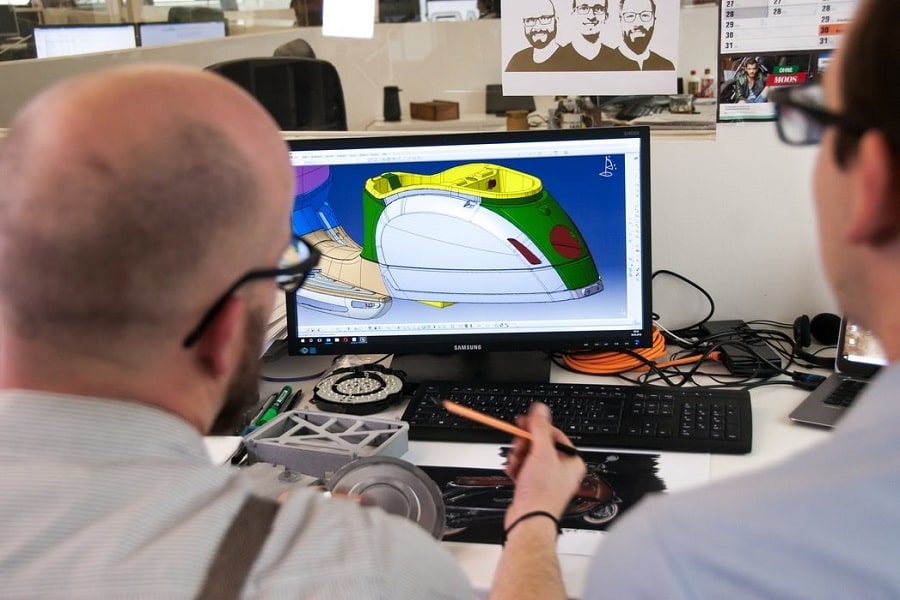
The 3D CAD modelling technology has revolutionised the fields of design and production, which are dynamic. This technology has transformed the way we create, fabricate and test out designs, especially in such fields as architecture, product manufacturing and furniture design. The ability to create 3D digital models has now allowed designers to streamline designs, enable faster production and recreate real-world environments. This blog will talk about using 3D CAD modelling services in any kind of industry, its use in 3D furniture design services, and how 3D CAD modelling leads to the creation of better design decisions and is faster to accomplish projects.
The operation of 3D CAD modelling?
This three-dimensional digital modelling, the use of specialised software to develop models, is called 3D CAD modelling. These unimaginably sophisticated models can be manipulated, analyzed and changed in real-time. The 3D CAD models also give us a realistic representation of the end product as opposed to traditional 2D drawings, and therefore, more visualisation is possible to be made and more informed decision making is made with references to the design phase. Through the 3D CAD Modelling, designers and engineers can virtually test various components, materials and features and reduce the possibilities of mistakes and design flaws to a minimum. This eliminates the costly modifications in the production process by simplifying the process of making the required changes early in the production process. The architectural and building construction professionals can have a visualisation of the building layout and structure through 3D CAD modelling.
To make sure that the final design will be reputable and functional, the architects can consider the contact of parts such as windows, doors and furniture in a space.
Product Development Through The 3d Cad Models Simplified
The 3D CAD modelling plays an important role in the creation of complex designs and prototypes in product development. Before real manufacturing, engineers use the models to simulate the actual operation of the real world and identify potential issues, such as stress areas, a weak point in materials or other misalignments. With this method of simulation, the whole development process is less costly and time-saving as well as less material wasteful. In the manufacturing industry, CAD 3D Modelling can help in achieving precision, whereby every component fits perfectly in the manufacture. It can also be used in creating technical documentation that manufacturers can use in making the finished product.
The Role Of Cad Conversions In Modern Design
Although most industries these days are using 3D CAD modelling, most of the outdated designs still require modification to be applied to the more modern software. CAD conversions are important in this process. CAD conversion is a process of transforming outdated file formats or old 2D drawings into an editable 3D model or up-to-date CAD files. In this way, companies are able to integrate old designs into their modern process, making them more useful and available in the new digital environment. As an illustration, the producer may, in the case of furniture design, utilise CAD Conversions to computerise old designs of iconic furniture pieces. This allows them to improve and modify the furnishings without necessarily coming up with a new one.
Innovative Tools In 3d Cad Modelling
In complicated forms and details beyond straightforward modelling, with advanced CAD modelling requirements, like surface modelling, solid modelling and subdivision modelling, can be created by designers using complex 3D modelling methods. Surface modelling is essential in the design of complex surfaces that are free-form, which are vital in the automotive and aerospace industries. Solid modelling has been ideal in mechanical components since there is a need to establish the mass and volume of pieces. A relatively more recent approach, named subdivision modelling, provides the unknown control of the complex forms, combining the precision of CAD and the elasticity of sculpting. These cutting-edge techniques, combined with top-down modelling methods, which put more emphasis on the overall design as opposed to the detail of individual parts, make a smooth transition between design and manufacturing possible. This will make sure that products are developed to be functional and aesthetic.
The Benefits Of 3d Cad Modelling To Any Industry
- Higher Accuracy and Precision: 3D CAD modelling is highly accurate, which is one of its key advantages. The designers are able to come up with very accurate depictions of a thing before it is put into production thus ensuring that even the minutest details are correct.
- Cost-effective: Simulations and digital testing enable businesses to identify design flaws at the initial stages and reduce resource waste, as well as ensure resource efficiency.
- Reduced Time-to-Market: 3D models can be created and modified much faster than traditional models due to their design creation, testing and adjustment. This accelerates the manufacturing process and assists businesses in bringing things to market faster.
- Enhanced Cooperation: 3D CAD Modelling assists them to collaborate better, particularly when working in remote conditions. The designers, the engineers and the manufacturers can all operate on the same model; as such, everyone is on the same page in the whole project.
Final Words
Technical innovation in the areas of design, engineering and production has seen 3D CAD modelling lead the pack. It simplifies more intelligent design processes, promotes easy collaboration and shortens the time taken to transform an idea into reality.
Visit Instander for more informative blogs.