
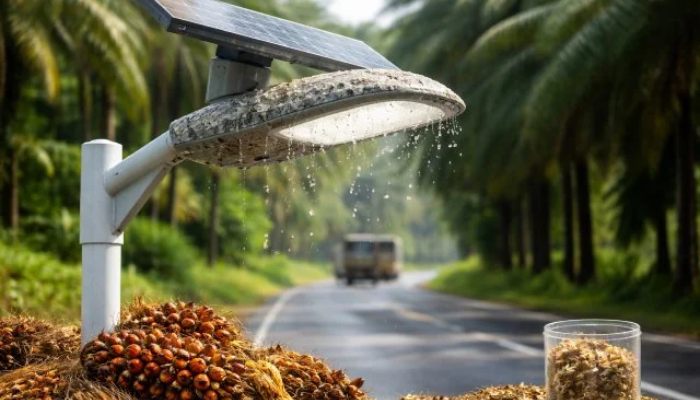
The concept of self cleaning streetlight oil palm waste is rapidly gaining traction in sustainable urban development. As cities worldwide strive to reduce carbon footprints and manage agricultural waste effectively, integrating oil palm waste into self-cleaning streetlights offers a revolutionary solution. These innovative streetlights not only provide efficient illumination but also harness the potential of agricultural by-products, reducing environmental pollution. By merging renewable resources with smart urban infrastructure, this technology represents a significant leap toward cleaner, greener cities.
Understanding Self Cleaning Streetlight Technology
Self-cleaning streetlights are designed to minimize maintenance while maximizing efficiency. Traditional streetlights often suffer from dust, grime, and debris accumulation, which reduces illumination and increases operational costs. By incorporating self-cleaning mechanisms, such as hydrophobic coatings or automated brush systems, streetlights maintain optimal brightness without frequent human intervention.
When combined with oil palm waste, this technology gains an eco-friendly dimension. Oil palm waste, including fronds, shells, and fibers, can be processed into bio-composite materials that are durable and lightweight. These materials not only enhance the streetlight’s structural integrity but also contribute to sustainability by repurposing agricultural residues. As a result, cities can reduce reliance on conventional materials like plastics or metals while promoting circular waste management practices.
The Role of Oil Palm Waste in Sustainable Infrastructure
Oil palm waste is a major by-product of the palm oil industry, often discarded or burned, leading to environmental hazards. By converting this waste into usable components for streetlights, municipalities can address multiple challenges simultaneously. Firstly, it minimizes landfill usage and reduces greenhouse gas emissions. Secondly, it provides a renewable and cost-effective alternative to conventional building materials.
Processed oil palm fibers can be combined with resins or bioplastics to create sturdy lamp casings or poles. The lightweight nature of these composites allows for easier installation and reduces transportation energy costs. Moreover, the natural insulating properties of oil palm materials can enhance the streetlight’s energy efficiency, complementing solar panels or LED lighting systems. Overall, the integration of oil palm waste in self-cleaning streetlights represents an intersection of waste valorization and sustainable urban design.
Advantages of Self Cleaning Streetlights Made from Oil Palm Waste
The fusion of self-cleaning technology and oil palm waste offers numerous benefits:
- Environmental Impact Reduction: Utilizing agricultural residues prevents unnecessary waste burning and reduces the city’s carbon footprint.
- Operational Efficiency: Self-cleaning surfaces require minimal maintenance, saving time, labor, and costs for municipal authorities.
- Durability and Resilience: Oil palm composites are resistant to corrosion, UV damage, and harsh weather conditions, extending streetlight lifespans.
- Energy Efficiency: Lightweight materials and improved insulation reduce energy consumption, complementing solar or LED lighting systems.
Additionally, these streetlights enhance urban aesthetics. The natural texture and color of oil palm composites can be designed to blend seamlessly with city landscapes, offering a modern yet eco-conscious appeal. Implementing such systems contributes to smart city initiatives while promoting sustainable agricultural waste management.
Implementation Strategies for Urban Areas
For successful integration of self cleaning streetlight oil palm waste in cities, proper planning and technology adoption are crucial. Municipal authorities should start with pilot projects in selected neighborhoods to assess performance, maintenance requirements, and community acceptance. Choosing optimal locations with heavy dust or pollution exposure can showcase the benefits of self-cleaning mechanisms effectively.
Collaboration with local palm oil industries ensures a steady supply of raw materials. Waste processing facilities can convert fronds, shells, and fibers into composite materials, ensuring consistency and quality. In addition, incorporating smart sensors and solar panels allows streetlights to adjust brightness according to real-time environmental conditions, enhancing energy savings. Proper training for maintenance teams is also essential to ensure longevity and efficiency of the self-cleaning systems.
Future Prospects and Innovations
The future of self cleaning streetlight oil palm waste technology is promising. Researchers are exploring advanced coatings that repel dirt and pollutants more efficiently, reducing the need for mechanical cleaning systems. Integration with IoT-enabled sensors can facilitate predictive maintenance, real-time monitoring, and energy optimization.
Moreover, innovations in bio-composite technology may allow for even stronger, lighter, and more weather-resistant materials derived from oil palm waste. This could open possibilities for multifunctional urban infrastructure, such as streetlights with built-in air purifiers or charging stations for electric vehicles. The convergence of sustainability, smart technology, and waste management positions these streetlights as a cornerstone of future eco-friendly urban landscapes.
Conclusion
Self cleaning streetlight oil palm waste technology represents a groundbreaking approach to urban sustainability. By merging innovative self-cleaning systems with eco-friendly materials derived from agricultural waste, cities can reduce maintenance costs, lower environmental impact, and create aesthetically appealing streetscapes. With ongoing research and technological advancements, these streetlights promise a future where renewable resources and smart urban infrastructure work hand-in-hand to build cleaner, greener cities.
FAQs
1. What is a self-cleaning streetlight?
A self-cleaning streetlight is equipped with mechanisms, like hydrophobic coatings or automated brushes, that prevent dust and grime accumulation, maintaining optimal brightness.
2. How does oil palm waste contribute to streetlight construction?
Oil palm waste can be processed into bio-composite materials used for poles or casings, providing durability, lightweight properties, and sustainability.
3. Are these streetlights energy-efficient?
Yes, using oil palm composites improves insulation, and combined with LEDs or solar panels, energy consumption is minimized.
4. Can these streetlights withstand harsh weather?
Yes, oil palm composites are resistant to UV radiation, corrosion, and extreme weather, enhancing longevity.
5. How do self-cleaning mechanisms work?
They either use hydrophobic coatings that repel water and dust or automated brush systems that periodically clean the surface.
6. Is this technology cost-effective for municipalities?
Yes, reduced maintenance and the use of waste materials lower long-term operational costs.
7. How is oil palm waste sourced for streetlights?
Municipalities can collaborate with local palm oil industries to collect fronds, shells, and fibers for processing into composites.
8. Can this system be integrated with smart city technology?
Absolutely. IoT sensors can monitor light performance, adjust brightness, and predict maintenance needs.
9. Are these streetlights environmentally friendly?
Yes, they utilize agricultural waste, reduce landfill use, and lower greenhouse gas emissions.
10. What is the future of this technology?
Future developments include advanced coatings, multifunctional designs, and further integration with sustainable urban infrastructure initiatives.